What a Full Year of Eating for Skin, Not Just Weight, Actually Changed
Quick Answer: Shifting a year of eating decisions toward skin-supportive nutrition — consistent protein, healthy fats, diverse plant intake, and reduced high-glycemic snacking — produced visible skin texture and tone improvements by month 3-4, but the bigger and less-discussed changes showed up in energy consistency, digestion, and a fundamentally different relationship with food choices by month 12.
Most nutrition content optimizes for the scale. Spending a full year deliberately optimizing for skin instead surfaced changes that weight-focused eating never touched — here’s the month-by-month reality, not the highlight reel.

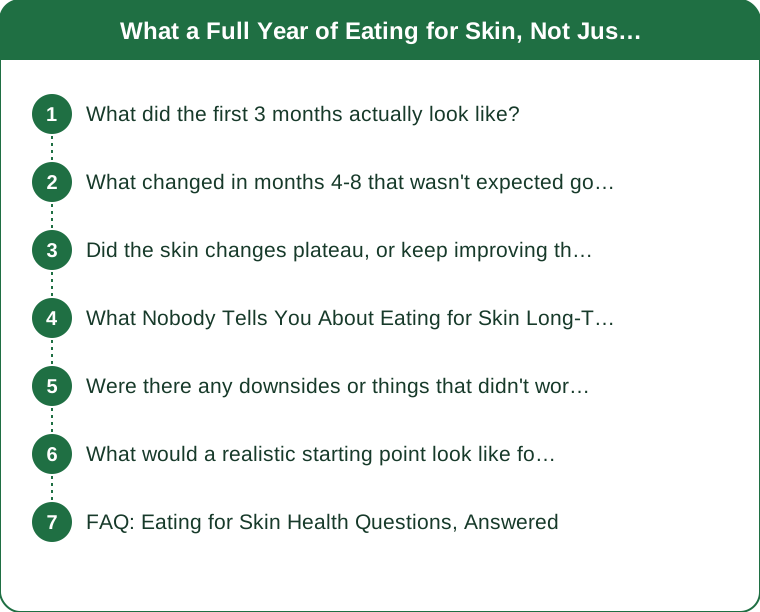
What did the first 3 months actually look like?
The first month was mostly adjustment friction — shifting away from convenient high-glycemic snacks (the kind that spike blood sugar and are increasingly linked in research to inflammatory skin responses) toward protein-and-fat-forward snacking required actual planning that weight-focused eating hadn’t demanded. Skin changes weren’t yet visible in month one; what was noticeable was less mid-afternoon energy crashing, likely tied to more stable blood sugar from the snack shift.
By month 3, the first visible skin changes appeared: reduced texture irregularity and what read as slightly more even tone, particularly after prioritizing omega-3 sources (fatty fish, walnuts, flax) several times a week rather than occasionally. This tracks with research on essential fatty acids’ role in skin barrier function — the change wasn’t dramatic, but it was the first tangible signal the approach was doing something distinct from a weight-focused approach.
What changed in months 4-8 that wasn’t expected going in?
The biggest surprise wasn’t skin at all — it was digestion. Deliberately increasing plant diversity (a target of 20-30 different plant foods weekly, following research linking gut microbiome diversity to that kind of variety, not just volume) improved digestive regularity noticeably by month 5, in ways that weren’t the original goal but turned out to be closely tied to the skin goal — gut health and skin health share more research-backed connection than most casual nutrition content acknowledges.
Hydration habits also shifted meaningfully during this stretch — not more water in isolation, but more consistent water paired with electrolyte-relevant foods (vegetables high in potassium, for instance), which correlated with less visible under-eye puffiness by month 6, more than plain increased water volume alone had managed in earlier attempts.
Did the skin changes plateau, or keep improving through month 12?
Skin-specific improvements largely plateaued around month 6-7 — texture and tone gains slowed, which tracks with skin cell turnover cycles eventually reflecting a stabilized input rather than continuing to show new gains from an already-consistent diet. This is worth naming honestly: nutrition changes don’t produce indefinite linear skin improvement, they produce a shift to a new, better baseline that then holds rather than keeps climbing.
What continued improving past month 7 wasn’t visual — it was resilience. Stress periods and poor sleep stretches (both of which show up on skin for most people) seemed to show up less severely on skin than they had pre-year, suggesting the underlying nutritional foundation was providing some buffer against the normal life factors that usually hit skin hardest.

What Nobody Tells You About Eating for Skin Long-Term
The relationship with food itself changed more than any single measurable outcome. Weight-focused eating, even when ‘healthy,’ tends to frame food choices around restriction and numbers. A full year of skin-focused eating reframed the same general healthy-eating behaviors (more protein, more plants, less processed sugar) around addition and function — eating for something rather than eating to avoid something. That reframe, more than any specific nutrient, was the change that felt most durable by month 12, because it didn’t depend on continued willpower the way restriction-based eating tends to.
Were there any downsides or things that didn’t work as expected?
Yes, worth being honest about: the increased focus on ‘skin foods’ occasionally tipped into a kind of dietary perfectionism in months 2-3, treating any ‘bad’ meal as undoing progress — which isn’t how skin biology actually works and created unnecessary stress (itself a skin-negative factor) around normal eating. Recognizing and correcting that mindset around month 4 was as important to the year’s actual outcome as any specific food choice was.
Also worth noting: supplement spending crept up faster than food spending in the early months, chasing specific ‘skin nutrients’ in pill form before the whole-food approach had even been given time to work — a genuinely common and avoidable overspend.
What would a realistic starting point look like for someone starting today?
Based on what actually moved the needle across the year: consistent protein at each meal, 2-3 omega-3-rich meals weekly, a target of adding rather than tracking plant variety, and treating hydration as paired with food rather than isolated. Skip the specific ‘skin supplement’ spending until the whole-food foundation has had a genuine 3-4 months to show its own effect — most of what moved outcomes in this year came from food pattern, not supplementation.
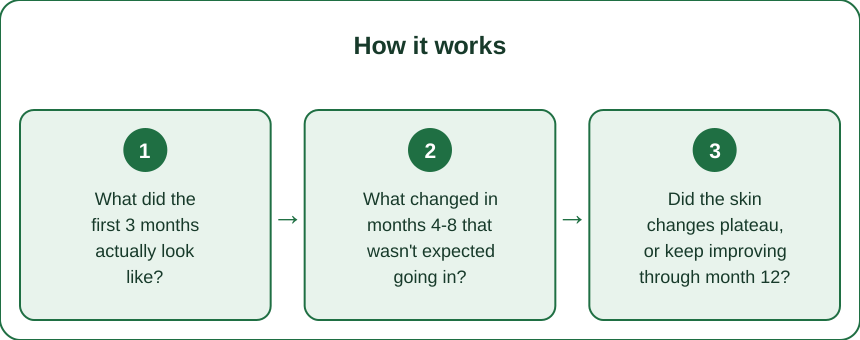
FAQ: Eating for Skin Health Questions, Answered
How long does it take to see skin changes from diet changes?
Based on this year and consistent with general research, initial visible changes commonly appear around 3-4 months, with gains typically plateauing to a new stable baseline by month 6-7.
Is eating for skin health different from eating for weight loss?
They can overlap significantly, but the framing differs — skin-focused eating emphasizes nutrient diversity and consistency (protein, omega-3s, plant variety) over calorie restriction, which is a different day-to-day decision-making pattern.
Do skin supplements matter as much as food choices?
Based on this experience and general nutrition evidence, whole-food consistency appears to matter more than supplementation for most people — supplements are worth considering after a food-first foundation has had time to work, not as a shortcut around it. This is general information, not medical advice.
TL;DR:
- Visible skin changes started around month 3-4; digestion and energy consistency improved even earlier
- Gut and skin health are more connected than casual nutrition content usually credits
- Skin-specific gains plateaued around month 6-7 into a new, better baseline — not indefinite improvement
- The biggest year-long change was psychological: eating for something instead of restricting from something
A full year confirmed the food pattern mattered more than any single supplement — and the mindset shift outlasted the visible skin changes themselves.
Keep Reading
This article is for general informational purposes only and is not medical advice. Always consult a qualified health professional for guidance specific to you.