The Complete Guide to Antioxidants in Food and What They Do for Skin
Quick Answer: Antioxidants are compounds that limit damage from reactive molecules produced by normal metabolism, UV exposure, and pollution. Dietary antioxidants do reach the skin and there is reasonable evidence for modest protective effects - particularly carotenoids, polyphenols, and vitamins C and E from food. What the evidence does not support is high-dose isolated supplements, which sometimes perform worse than the food they came from.
Eat a wide range of colours, include a fat source, and stop looking for the one miracle ingredient.

What does antioxidant actually mean?
It is a functional description rather than a category of food, which is the source of most of the confusion.
Your cells produce reactive oxygen species as a normal by-product of using oxygen to make energy. UV radiation produces more. So do pollution, smoking, and inflammation. These molecules are chemically reactive and can damage cell membranes, proteins, and DNA if they are not neutralised.
An antioxidant is simply any molecule that donates an electron to neutralise one of these without becoming destructively reactive itself. That covers an enormous range of chemically unrelated compounds - vitamins C and E, carotenoids like beta-carotene and lycopene, polyphenols like flavonoids and anthocyanins, selenium, and many others.
The important thing this definition implies: antioxidants are not interchangeable. They work in different parts of the cell, on different reactive species, and they regenerate each other in a network. Vitamin C is water-soluble and works in the aqueous parts of cells; vitamin E is fat-soluble and protects membranes; vitamin C can regenerate spent vitamin E. Taking a large dose of one does not substitute for the others, and it can disrupt the balance.
There is also a point worth making that rarely appears in beauty content: reactive oxygen species are not purely harmful. They serve as signalling molecules, they are part of how immune cells kill pathogens, and they play a role in the adaptive response to exercise. Completely suppressing them is not the goal, which is part of why very high-dose supplementation has produced disappointing and occasionally negative results in trials.
Do dietary antioxidants actually reach the skin?
Yes, and this is better established than most of the surrounding claims.
Skin receives nutrients through the bloodstream like any other organ, and several dietary antioxidants accumulate there measurably.
Carotenoids are the clearest case. Beta-carotene, lycopene, and lutein accumulate in the skin over weeks of consistent intake, and skin carotenoid levels can be measured non-invasively. High intake produces a visible yellow-orange shift in skin tone - a real effect, documented in studies where observers rated carotenoid-tinted skin tone as healthier-looking than a tan.
Vitamin C is present in skin at high concentrations, higher than in blood, and it is required for collagen synthesis. This is not a marketing claim - it is basic biochemistry. Deficiency produces the connective tissue failures of scurvy.
Vitamin E is the main fat-soluble antioxidant in skin, concentrated in cell membranes and in sebum, where it protects lipids from oxidation.
Polyphenols from tea, cocoa, and berries have been shown to reach the skin and to affect skin blood flow and UV response, though the effects are generally modest.
Where the evidence is strongest is UV protection. Multiple studies find that consistent intake of carotenoids or polyphenols modestly increases the amount of UV exposure required to produce redness - typically by around 20 to 25 percent after 10 to 12 weeks. That is a real effect and a small one. It is not a substitute for sunscreen, and no one should treat it as one. It is better understood as a background layer that reduces cumulative damage over years.
Which foods are actually worth prioritising?
By category, with the specific compounds that matter.
Carotenoid sources. Sweet potato, carrots, pumpkin, and red peppers for beta-carotene. Cooked tomatoes for lycopene - cooking and a little oil increase its bioavailability substantially, so tomato sauce beats a raw tomato here. Dark leafy greens for lutein and zeaxanthin. Egg yolks are an unusually well-absorbed lutein source.
Polyphenol sources. Berries, particularly blueberries, blackberries, and pomegranate for anthocyanins. Green tea for catechins. Dark chocolate at 70 percent or above for flavanols. Olive oil, especially extra virgin, for hydroxytyrosol. Red grapes, red onions, and apples for quercetin.
Vitamin C sources. Peppers - a red pepper contains more than an orange. Kiwi, citrus, strawberries, and brassicas. Vitamin C degrades with heat and time, so raw or lightly cooked and reasonably fresh matters here in a way it does not for carotenoids.
Vitamin E sources. Almonds, sunflower seeds, hazelnuts, avocado, and vegetable oils. This one is worth attention because intake is commonly below recommendations, particularly in lower-fat diets.
Selenium. Brazil nuts are by far the densest source - one or two a day is sufficient, and more is genuinely not better, since selenium toxicity is possible.
Omega-3 fats, while not antioxidants themselves, belong in this conversation because they reduce inflammation and support the skin barrier. Oily fish twice a week, or walnuts and flaxseed.
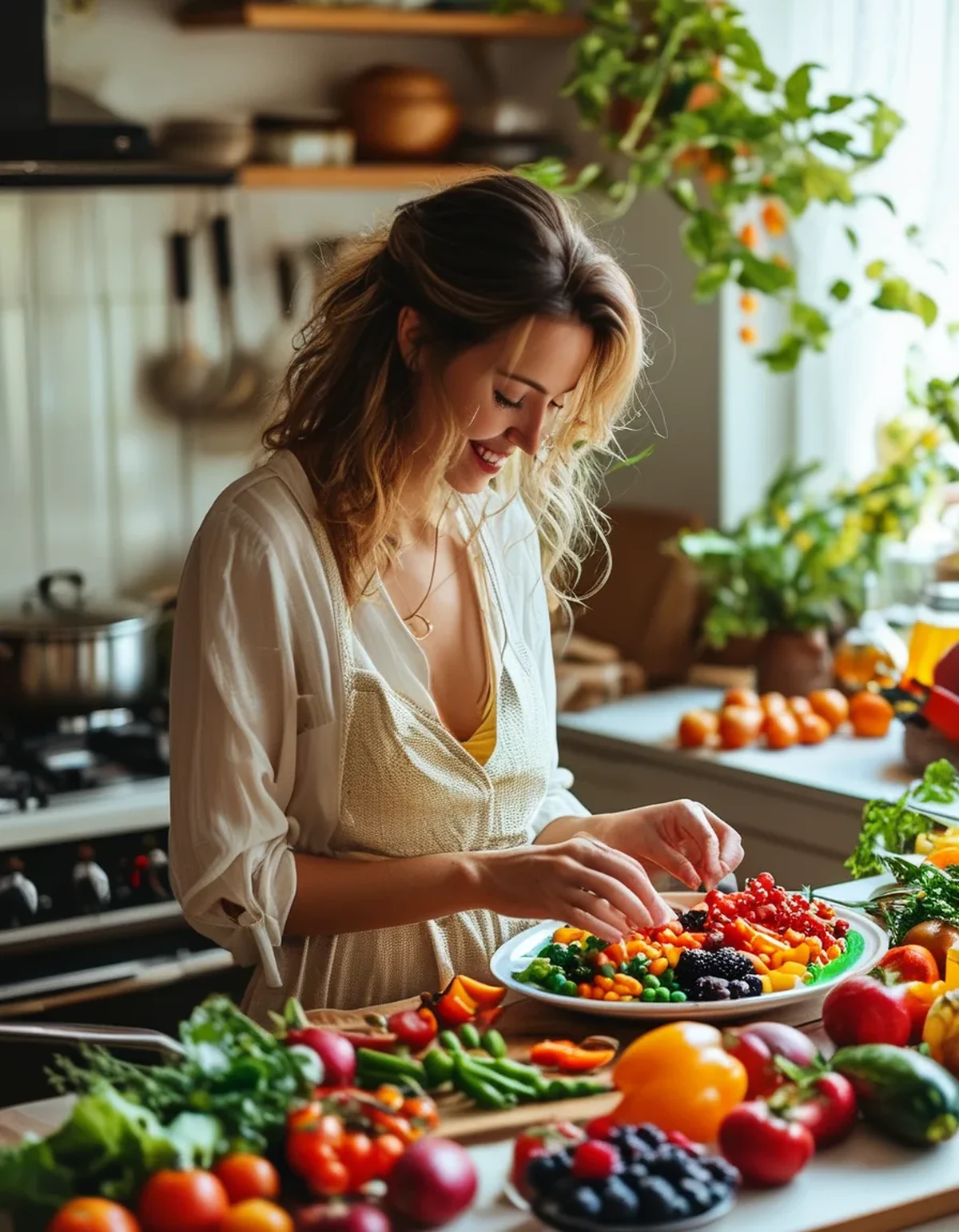
The practical instruction that captures most of this: eat a range of colours and include a fat source. Carotenoids and vitamin E are fat-soluble and their absorption improves substantially with fat in the same meal - a salad with olive oil delivers considerably more than the same salad without.
Why do antioxidant supplements underperform?
Because they isolate one compound from a system that operates as a network, and because dose response is not linear.
This is one of the more consistent findings in nutrition research and one of the most ignored. Large trials of high-dose isolated antioxidant supplements have repeatedly failed to reproduce the benefits observed from antioxidant-rich diets - and in some cases have found harm. High-dose beta-carotene supplementation increased lung cancer risk in smokers in two large trials. Some high-dose vitamin E trials found increased mortality.
The explanations that best fit the evidence:
- The network problem. Antioxidants regenerate each other. Flooding one part of the system without the others can leave oxidised intermediates that are themselves reactive.
- The pro-oxidant switch. Several antioxidants become pro-oxidant at high concentrations, particularly in the presence of metal ions. More is not more.
- The wrong attribution. Whole foods contain hundreds of compounds plus fibre. The benefit associated with a diet high in vegetables may not be attributable to the specific antioxidant that got isolated and bottled.
- Interference with useful signalling. High-dose vitamin C and E supplementation has been shown to blunt some training adaptations, because the reactive species produced during exercise are part of the signal that drives adaptation. That is a striking and well-replicated finding.
The practical conclusion: get antioxidants from food. Supplement to correct an identified deficiency, on advice, rather than to boost a system that is not deficient. This is general information, not medical advice - and it is worth a conversation with a doctor or dietitian if you take high-dose supplements regularly.
How long does any of this take to show?
Longer than the marketing suggests, and the timeline differs by mechanism.
Weeks 1 to 4: nothing visible. Blood levels of water-soluble antioxidants rise within days, but skin has not turned over yet. Anyone claiming visible change in this window is describing hydration or expectation.
Weeks 4 to 8: skin turnover completes. The full cycle of epidermal renewal takes roughly four to six weeks, longer with age. Changes affecting new cells become visible around here. Carotenoid accumulation in skin becomes measurable in this window, and skin tone changes start to be detectable at high intakes.
Weeks 8 to 12: the UV protection studies report their effects. This is the point at which measurable changes in minimal erythema dose appear in trials. It is also roughly where people report skin feeling more resilient, though that is subjective.
Months 3 to 6 and beyond: collagen-related changes. Collagen turnover is slow, and anything acting through collagen synthesis operates over months rather than weeks.
Years: the part that actually matters most. The cumulative effect of consistently lower oxidative burden across decades is where the meaningful protection lies, and it is invisible in any short trial. That is unsatisfying and it is honest.
One implication worth taking seriously: judging a dietary change by how your skin looks after two weeks guarantees you will conclude it does not work. The changes that matter operate on a timescale that requires you to keep going without immediate feedback.
What Nobody Tells You About Antioxidants and Skin
Sun protection outperforms every food on this list by an enormous margin. Dietary antioxidants might raise your UV tolerance by 20 percent over three months. Sunscreen does considerably better than that immediately. Anyone selling dietary antioxidants as a photoprotection strategy is describing a supporting player as the lead.
Smoking undoes it faster than food builds it. Smoking imposes a large oxidative burden and independently degrades collagen and skin blood flow. No diet compensates for it, and this is not a marginal effect.
Sleep and blood sugar matter more than any single food. Chronic poor sleep and chronically elevated blood glucose both affect skin visibly and through mechanisms unrelated to antioxidant intake. It is entirely possible to eat an excellent antioxidant-rich diet and undermine it with four hours of sleep.
Cooking helps some antioxidants and destroys others. Lycopene and beta-carotene become more available with cooking; vitamin C degrades with heat. Eating a mix of raw and cooked is the practical answer, rather than committing to either.
Frozen produce is often better than fresh. It is picked and frozen at peak ripeness, while fresh produce loses vitamin C over days of transport and storage. Frozen berries and spinach are not a compromise here.
The colour rule genuinely works as a heuristic. Different pigment classes are different antioxidant families, so eating a range of colours across a week is a reasonable proxy for eating a range of compounds. It is simplistic and it is much better than trying to track individual nutrients.
Topical and dietary vitamin C do different jobs. Applied topically at appropriate concentration and pH, vitamin C reaches the skin directly at concentrations diet cannot achieve. Dietary vitamin C supports systemic collagen synthesis. Neither replaces the other, and using both is reasonable.
FAQ: Antioxidants and Skin Questions, Answered
Can I eat enough carrots to change my skin tone?
Yes, and it takes a lot and several weeks. Carotenoid-related skin colour changes are documented at high intakes - a noticeable yellow-orange shift, harmless and reversible. Studies suggest observers rate that tone as healthy-looking, though it is a curiosity rather than a goal.
Is green tea better than coffee for this?
Green tea has a specific catechin profile with reasonable evidence for skin effects. Coffee is also rich in polyphenols and is a major dietary source for many people. Neither is a problem, and there is no need to swap one for the other on antioxidant grounds.
Do antioxidant skincare products work better than food?
They do different things. Topical products deliver high concentrations directly to skin, which diet cannot match locally. Diet supports the whole system, including the deeper layers products struggle to reach. Both, if you want both.
Should I take a multivitamin as insurance?
A standard-dose multivitamin is unlikely to cause harm and unlikely to do much if your diet is reasonable. It is the high-dose single-nutrient supplements where the evidence turns unfavourable. If you suspect a deficiency, testing is more useful than guessing.
Is there any food that stands out above the rest?
No, and that is the honest answer. Every few years a food gets promoted as the antioxidant leader, usually on the basis of a lab measure that does not predict what happens in a body. Variety consistently outperforms concentration.
TL;DR:
- Antioxidant is a functional description covering chemically unrelated compounds that work in different places and regenerate each other - they are not interchangeable.
- Dietary antioxidants do reach the skin. Carotenoids accumulate measurably, and consistent intake modestly raises UV tolerance - by around 20 percent over 10 to 12 weeks.
- High-dose isolated supplements repeatedly underperform food and occasionally cause harm. Get them from meals.
- Include fat with carotenoid and vitamin E sources, mix raw and cooked, and treat frozen produce as equal to fresh.
- Give it 8 to 12 weeks minimum, and remember sunscreen, sleep, and not smoking all matter more than any food here.
Eat a wide range of colours with some olive oil on top. That is most of the guide, and it does not need a supplement aisle.
Keep Reading
This article is for general informational purposes only and is not medical advice. Always consult a qualified health professional for guidance specific to you.