Does Drinking More Water Really Fix Your Skin?
Quick Answer: Adequate hydration supports skin elasticity and plumpness, and measurable improvements have been shown in people who were previously under-hydrated — but for someone already drinking sufficient water, chugging extra beyond that point doesn’t meaningfully improve skin further, since topical moisture barrier health matters more once baseline hydration is met.
The 8-glasses-a-day skin claim isn’t wrong, exactly — it’s just aimed at the wrong group of people.
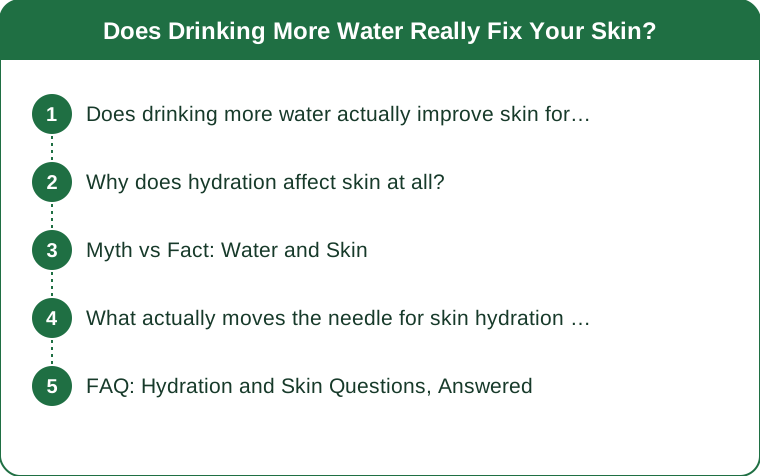
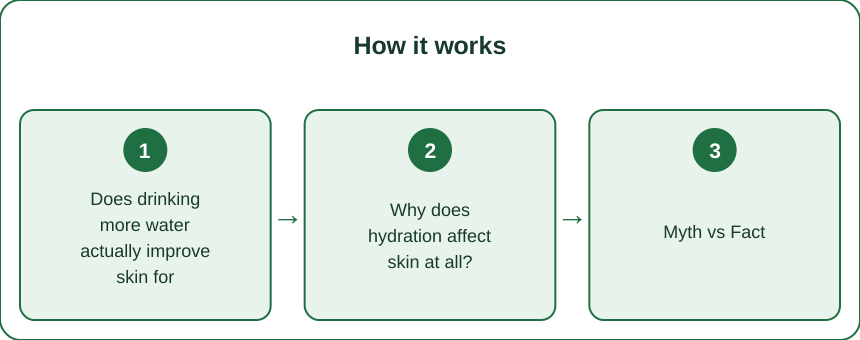
Does drinking more water actually improve skin for everyone?
Research shows hydration improvements are most measurable in people who started out mildly dehydrated — for them, increasing water intake does improve skin thickness and elasticity measurably.
For people who are already adequately hydrated, additional water intake hasn’t shown the same added benefit, which is why the universal ‘just drink more water’ skin advice doesn’t fully hold up under scrutiny.
Why does hydration affect skin at all?
Skin cells, like other cells, need adequate water content to maintain structural plumpness and elasticity — under-hydrated skin genuinely looks and behaves differently, appearing more prone to fine lines and looking duller.
But skin’s outermost barrier (the stratum corneum) also depends heavily on lipids and topical moisture retention, which is a separate system from how much water you’re drinking — this is why some very well-hydrated people still have dry, flaky skin.

Myth vs Fact: Water and Skin
Myth: Drinking a gallon of water a day will visibly transform your skin. Fact: once you’re adequately hydrated, extra water mostly just means extra bathroom trips — the skin benefit plateaus.
Myth: Dry skin always means you’re not drinking enough water. Fact: dry skin is far more often a barrier/moisturizer issue than a hydration-intake issue — internal hydration and external barrier health are different problems.
Myth: Water-rich foods don’t count toward skin hydration. Fact: water-rich foods (cucumber, watermelon, citrus) contribute meaningfully to total hydration and count just as much as drinking water directly.
What actually moves the needle for skin hydration and quality?
- Meeting baseline daily water needs (roughly guided by thirst and pale-yellow urine, not a fixed universal number)
- A moisturizer suited to your skin type to address the topical barrier side separately from internal hydration
- Humidifier use in dry climates or heated/air-conditioned environments, which affects skin moisture loss directly
- Not over-exfoliating, which damages the barrier and undoes what hydration alone can’t fix
FAQ: Hydration and Skin Questions, Answered
How much water is actually ‘enough’ for skin benefits?
There’s no universal magic number — general hydration guidelines based on thirst and urine color are a reasonable practical target rather than a fixed glass count.
Can drinking too much water hurt your skin?
Drinking water to excess doesn’t directly harm skin, but it won’t provide additional skin benefit past adequate hydration, and extreme overconsumption can affect electrolyte balance.
Is topical hydration (moisturizer) or water intake more important for skin?
Both matter but address different things — water intake supports overall cell hydration, while a moisturizer manages the skin barrier’s moisture retention; neither fully substitutes for the other.
TL;DR:
- Hydration improves skin most for people who start out under-hydrated, not everyone equally
- Skin barrier health (moisturizer) is a separate issue from internal water intake
- Water-rich foods count toward hydration just like drinking water does
- Past adequate hydration, more water doesn’t keep improving skin
Drink enough water to feel hydrated — then put your remaining effort into a good moisturizer, not a bigger water bottle.
Keep Reading
This article is for general informational purposes only and is not medical advice. Always consult a qualified health professional for guidance specific to you.