The Glow Menu: A Week of Eating for Your Skin
Quick Answer: A skin-supporting week is simple: protein at every meal (skin is built from amino acids), fatty fish twice weekly for omega-3s, a daily handful of nuts and seeds for vitamin E and zinc, berries most mornings, something fermented daily, and water on a schedule. Demote sugary drinks. No powders required.
The supplement aisle sells the shortcut. The grocery store sells the actual route, and it’s considerably cheaper.
A week of skin-first eating is genuinely unglamorous — fish, berries, nuts, water at predictable intervals — and it outperforms most of what’s sold in a tub with a serif font on it.
Here’s what that week actually looks like, meal by meal.

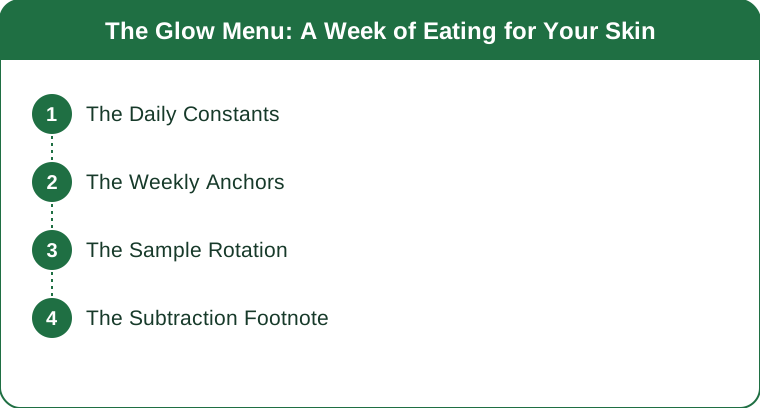
What should I eat every single day for my skin?
Three constants, running underneath everything else.
Water, on a schedule. Skin registers dehydration before you feel thirsty — thirst is a late signal, not an early one. Rather than tracking a total, anchor it: a glass on waking, one with each meal, one mid-afternoon. That’s five glasses without any effort at all, and most people land in a good place from there.
A palm of protein at every meal. This is the one people skip, and it matters most. Collagen is built from dietary amino acids — glycine, proline, and lysine in particular. If protein intake is low, the raw materials aren’t there, and no topical product changes that. Aim for roughly 25–30g per meal: eggs, fish, chicken, tofu, legumes, Greek yogurt.
Worth saying plainly: the collagen supplement conversation starts at dinner, not at the pharmacy. Whether ingested collagen peptides outperform ordinary dietary protein is still genuinely debated; adequate total protein is not.
Colorful produce, every day. Carotenoids from orange and red vegetables, and polyphenols from deeply colored fruit. These support the skin’s antioxidant defenses against oxidative stress, including from UV exposure. Not a replacement for sunscreen — a supporting layer underneath it.
What are the weekly anchors?
Four things to hit across the week, none of which require planning beyond a shopping list.
Fatty fish, twice. Salmon, sardines, mackerel, or trout. The long-chain omega-3s (EPA and DHA) support the skin’s lipid barrier, which is what holds moisture in. Two servings a week is the standard recommendation, and sardines are the cheapest way to hit it by a wide margin.
A daily handful of nuts and seeds. Almonds and sunflower seeds for vitamin E; pumpkin seeds and cashews for zinc. Zinc is genuinely important for skin repair and wound healing, and mild deficiency is more common than people assume. About 30g is a handful.
Berries most mornings. The pigments doing the color work are the same polyphenols doing the antioxidant work. Blueberries, blackberries, and raspberries lead. Frozen is nutritionally comparable and much cheaper.
Something fermented daily. Yogurt with live cultures, kefir, kimchi, sauerkraut, or miso. The gut-skin axis is an active research area rather than a settled one, but the association between gut health and inflammatory skin conditions is consistent enough to make a daily fermented food a sensible low-cost habit.

What does a realistic week look like?
Not a meal plan you’ll abandon by Wednesday — a rotation with swaps.
Monday
- Breakfast: Greek yogurt, berries, walnuts
- Lunch: Chickpea and tomato bowl with olive oil and greens
- Dinner: Salmon with roasted vegetables and leafy greens
Tuesday
- Breakfast: Eggs scrambled with peppers and spinach
- Lunch: Sardine and white bean salad
- Dinner: Tofu stir-fry with broccoli and brown rice
Wednesday
- Breakfast: Overnight oats with chia and blueberries
- Lunch: Leftover stir-fry with an added egg
- Dinner: Chicken with sweet potato and a big salad
Thursday onward: repeat with swaps. Trout instead of salmon, lentils instead of chickpeas, kefir instead of yogurt.
The pattern is unmistakably Mediterranean-ish, and that’s not a coincidence — skin and inflammation research keeps arriving at roughly the same table. Fish, legumes, vegetables, olive oil, nuts, fermented dairy.
One practical note: cook once, eat twice. The dinner protein becomes tomorrow’s lunch. That’s the difference between a menu that survives a real week and one that survives a blog post.

What should I cut back on?
The subtraction column does visible work, sometimes faster than the addition column.
Sugar spikes. Glycation — where excess glucose binds to proteins including collagen and elastin — is collagen’s least favorite chemistry, and the resulting cross-linked structures are stiffer and less resilient. This is a slow, cumulative process rather than something that happens after one dessert, but the daily sugary drink is the version that adds up fastest.
Alcohol, particularly with dehydration. Alcohol is a diuretic and disrupts sleep quality, and sleep is when most skin repair happens. The combination does more than either alone.
Ultra-processed food generally, mostly because of what it displaces — the produce, protein, and fiber it takes the place of.
Start with one change: demote the daily sugar-sweetened drink. That single swap tends to produce noticeable change within a few weeks, and it requires no shopping list at all.
What Nobody Tells You
The timeline is 6–12 weeks, not 6–12 days. Skin cell turnover runs roughly 28 days in younger adults and slows with age, so you’re waiting on at least two full cycles before dietary changes show clearly. Anything promising a week is selling something.
Sleep is doing more than your diet is. Most skin repair happens during deep sleep. A perfect glow menu paired with five hours a night is a losing trade — fix the sleep first if you have to choose.
Sunscreen outranks everything on this page. UV exposure is the dominant driver of visible skin aging by a wide margin. Diet supports; sunscreen protects. If you do one thing, it isn’t a berry.
Hydration has a ceiling. Drinking more water than you need doesn’t produce extra glow, it produces extra trips to the bathroom. Adequate is the goal, not maximal.
FAQ
What foods make your skin glow?
Fatty fish, berries, nuts and seeds, leafy greens, orange vegetables, olive oil, eggs, and fermented dairy. The common thread is protein, omega-3 fats, antioxidants, and zinc — the four inputs skin actually uses to build and repair itself.
How long until I see results from eating for my skin?
Six to twelve weeks for visible change, because you’re waiting on at least two full skin turnover cycles. Hydration-related improvements — less tightness and dullness — can show up within a week or two. Anything faster than that is probably sleep or hydration, not diet.
Do collagen supplements work?
The evidence is mixed and still developing. Some trials show modest improvements in skin elasticity and hydration; others show little effect, and study quality varies. What isn’t debated is that adequate total dietary protein supplies the amino acids collagen is built from. Get protein right first — that’s the free version, and it’s the one with the strongest evidence.
What should I drink for better skin?
Water, mostly. Green tea is a reasonable addition for its polyphenols. The bigger win is subtraction: cutting the daily sugar-sweetened drink does more than adding any specific beverage.
When should I see a dermatologist instead?
If you have persistent acne, rosacea, eczema, sudden changes in your skin, or any new or changing mole, see a dermatologist — those need medical assessment, not a grocery list. Diet supports skin health; it doesn’t treat skin conditions.
TL;DR:
- Daily: water on a schedule, a palm of protein per meal, colorful produce
- Weekly: fatty fish twice, nuts and seeds daily, berries most mornings, something fermented daily
- The pattern is Mediterranean-ish, because that’s where the research keeps landing
- Subtract the daily sugary drink — the fastest visible win
- Expect 6–12 weeks; you’re waiting on two skin turnover cycles
- Sleep and sunscreen outrank everything here. Diet supports, it doesn’t replace
- See a dermatologist for persistent conditions or any changing mole
The glow was never in the powder. It was on the grocery list, priced like groceries.
Keep Reading
This article is for general informational purposes only and is not medical advice. Always consult a qualified health professional for guidance specific to you.