The Complete Science of Eating for Skin That Actually Glows
Quick Answer: Skin appearance responds to nutrition through several distinct mechanisms — collagen synthesis, oxidative stress management, hydration, and inflammation — and each depends on different nutrients working over different timelines, typically 4-12 weeks before visible change, since skin cells turn over gradually.
‘Eat better for glowing skin’ gets said so often it’s lost its meaning — here’s what’s actually happening beneath the surface, nutrient by nutrient.

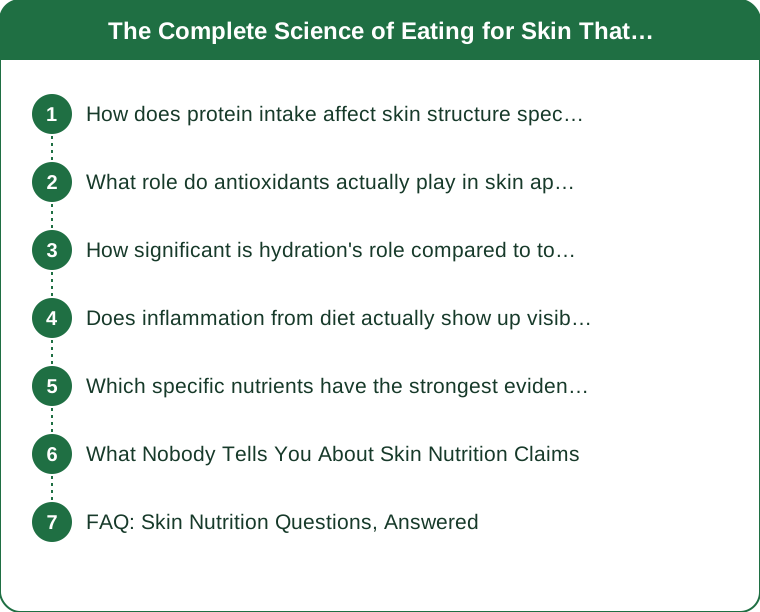
How does protein intake affect skin structure specifically?
Collagen, the structural protein that gives skin firmness, requires adequate dietary protein along with vitamin C and specific amino acids like proline and glycine to synthesize properly. Insufficient protein intake over time can measurably reduce the body’s collagen production capacity, showing up as reduced skin resilience and slower wound healing, not just a vague sense of dullness.
What role do antioxidants actually play in skin appearance?
UV exposure and normal metabolic processes generate free radicals that damage skin cells and accelerate visible aging through a process called oxidative stress. Antioxidants from foods like berries, leafy greens, and colorful vegetables neutralize some of this damage, and diets consistently higher in antioxidant-rich produce are associated with fewer visible signs of oxidative skin damage over time.
How significant is hydration’s role compared to topical products?
Adequate internal hydration supports skin’s elasticity and barrier function from within, complementing rather than replacing topical moisturizers, which work primarily on the skin’s surface layer. Chronic mild dehydration can make skin appear less plump and more prone to fine lines, an effect that’s reversible with consistent fluid intake over days to weeks.

Does inflammation from diet actually show up visibly on skin?
Diets high in refined sugar and processed foods are associated with increased systemic inflammation, which some research links to conditions like acne and accelerated visible aging, through a process involving glycation — where excess sugar molecules bind to collagen and reduce its flexibility over time.
Which specific nutrients have the strongest evidence for skin health?
Vitamin C (collagen synthesis), vitamin E and polyphenols (antioxidant protection), omega-3 fatty acids (reducing inflammation and supporting the skin barrier), zinc (wound healing and oil regulation), and biotin (though genuine deficiency is rare in typical diets) each have distinct, evidence-supported roles rather than being interchangeable ‘skin vitamins.‘
How long does it actually take to see visible change from dietary shifts?
Skin cells turn over on a cycle of roughly 4-6 weeks for the surface layer, with deeper structural changes like improved collagen density taking closer to 8-12 weeks of consistent nutritional input to become visibly noticeable — meaning short-term dietary changes rarely produce the dramatic ‘glow’ often promised in a week or two.
What Nobody Tells You About Skin Nutrition Claims
Most skin-nutrition marketing implies a fast, dramatic transformation from a single food or supplement, but the actual mechanisms — collagen synthesis, oxidative stress reduction, inflammation management — are slow, cumulative processes. A consistently balanced diet over months does more than any single ‘superfood’ consumed occasionally, even though that’s a far less exciting claim to sell.
FAQ: Skin Nutrition Questions, Answered
Do collagen supplements actually work as well as dietary protein?
Some research supports modest benefits from collagen peptide supplements, but they work alongside, not instead of, adequate overall protein and vitamin C intake from a balanced diet.
Can diet alone fix acne or other skin conditions?
Diet can be a meaningful contributing factor for some people, particularly around sugar and dairy sensitivity, but it’s rarely the sole cause, and persistent skin conditions are worth discussing with a dermatologist alongside any dietary changes.
Is it worth taking a multivitamin specifically for skin?
For someone with a genuinely varied, adequate diet, a multivitamin adds limited additional skin benefit — the effect is much more noticeable for someone correcting an actual nutritional gap than as a blanket addition to an already balanced diet.
TL;DR:
- Skin appearance responds to nutrition through several distinct, slow-acting mechanisms
- Protein and vitamin C support collagen; antioxidants counter oxidative damage
- Hydration and reduced inflammation both play measurable supporting roles
- Visible change typically takes 4-12 weeks of consistent nutritional input, not days
The science supports nutrition genuinely affecting skin appearance, just on a slower, less dramatic timeline than most marketing claims suggest.
Keep Reading
This article is for general informational purposes only and is not medical advice. Always consult a qualified health professional for guidance specific to you.