Why Sleep Quality Matters More Than Any Skincare Product You Own
Quick Answer: During deep sleep, your body increases blood flow to skin, ramps up collagen production, and repairs UV and environmental damage from the day — processes that no topical product can fully replicate, which is why consistently poor sleep shows up as dullness, slower healing, and accelerated fine lines regardless of how good your routine is.
The idea of ‘beauty sleep’ sounds like marketing until you look at what actually happens in skin tissue during deep sleep stages. It’s one of the more literally true beauty clichés in existence.

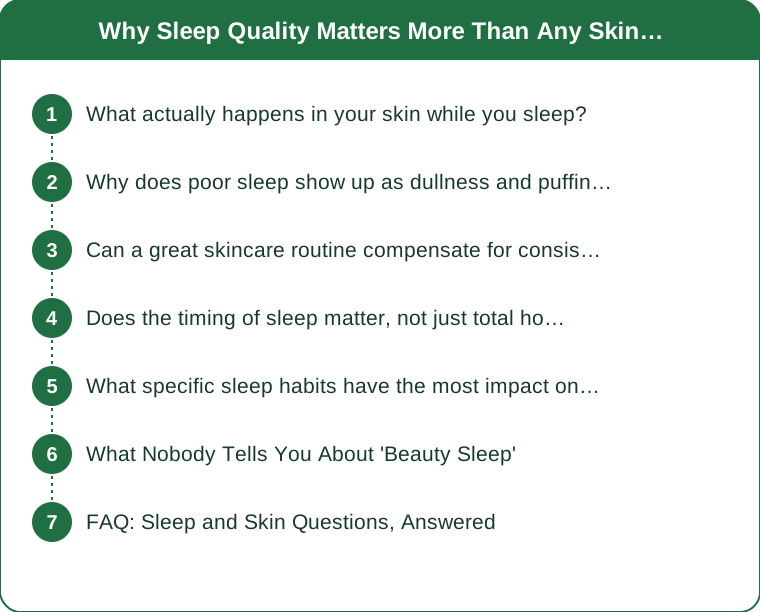
What actually happens in your skin while you sleep?
During deep sleep, particularly the slow-wave stages in the first half of the night, blood flow to the skin increases and growth hormone release peaks — this is when the bulk of daily skin repair and collagen synthesis occurs. Skin cell turnover also accelerates overnight, which is part of why skin can look measurably different (plumper, more even-toned) after a genuinely restful night versus a rough one.
This isn’t a subtle process — researchers studying skin barrier recovery after UV exposure have found meaningfully slower healing in sleep-deprived subjects compared to well-rested ones, using identical skincare.
Why does poor sleep show up as dullness and puffiness the next day?
Sleep deprivation increases cortisol, a stress hormone that breaks down collagen and elastin when chronically elevated, and also disrupts the lymphatic drainage that normally reduces overnight fluid buildup around the eyes. This combination — collagen breakdown plus poor fluid drainage — is why one bad night shows up as puffiness, and repeated bad nights show up as a duller overall complexion that concealer only partially masks.
The visible effects compound: someone who sleeps poorly 3-4 nights a week isn’t just tired-looking occasionally, they’re accumulating a slower repair deficit that skincare products are working uphill against.
Can a great skincare routine compensate for consistently bad sleep?
Topical products can meaningfully help with hydration, barrier support, and surface texture, but they cannot replicate the internal repair processes that only happen during deep sleep — collagen synthesis, growth hormone release, and cellular turnover are systemic, not something a cream applies from outside. Think of skincare as maintaining what you have and modestly supporting repair, while sleep is the primary engine that determines how much repair is actually happening in the first place.
This is why people often notice that an expensive routine ‘stops working’ during a stressful, sleep-poor period — the routine hasn’t changed, but the internal repair capacity it’s supporting has dropped.

Does the timing of sleep matter, not just total hours?
Yes — much of the collagen-supporting repair work is concentrated in the first half of the night, tied to slow-wave sleep that’s more prevalent early on. This means a fragmented sleep pattern (going to bed very late, or waking frequently) can show skin effects even with a technically adequate total sleep number, because the early deep-sleep window gets compressed or disrupted.
Consistency in sleep timing — going to bed and waking at similar times — supports more stable slow-wave sleep than an inconsistent schedule with the same total hours.
What specific sleep habits have the most impact on skin, beyond just ‘sleep more’?
Beyond total hours, sleeping on your back reduces the mechanical creasing against a pillow that contributes to sleep lines over years, and a cool, dark room (65-68°F) supports deeper, less fragmented sleep stages than a warm or bright one. Reducing screen exposure in the hour before bed also helps by not delaying melatonin release, which pushes back the onset of the deep-sleep window where the most repair happens.
Silk or satin pillowcases are often marketed for skin benefits, and while the friction-reduction claim has some basis, it’s a minor factor compared to sleep duration and consistency — worth doing, but not a substitute for actually sleeping enough.
What Nobody Tells You About ‘Beauty Sleep’
The phrase suggests sleep is one input among many for good skin, but the research suggests it’s closer to the foundational variable everything else sits on top of — a great diet and skincare routine paired with chronic sleep deprivation will underperform a mediocre routine paired with consistently good sleep. This is uncomfortable advice because sleep is genuinely harder to control than buying a new serum, but it’s also the more honest answer to ‘why isn’t my skin improving.’
Many dermatologists report that patients who address sleep issues see skin improvements that rival or exceed what a new product launch delivers, simply because the internal repair system finally has the conditions it needs to function.
FAQ: Sleep and Skin Questions, Answered
How many hours of sleep is actually needed for visible skin benefits?
Most research points to 7-9 hours as the range where skin repair processes function normally; consistently dropping below 6 hours is where visible effects like dullness and slower healing become more noticeable.
Can you ‘catch up’ on skin repair with a good weekend of sleep after a bad week?
Partially — a few nights of good sleep does help, but the repair deficit from several poor nights isn’t fully reversed in one or two nights, which is why consistency matters more than occasional catch-up sleep.
Does napping help skin the same way nighttime sleep does?
Naps can help with alertness and stress reduction, but they don’t include the same extended slow-wave sleep stages as a full night, so they’re a poor substitute for consistent nighttime sleep specifically for skin repair.
TL;DR:
- Deep sleep drives collagen synthesis, blood flow, and skin repair that no topical product replicates
- Poor sleep raises cortisol and disrupts lymphatic drainage, showing up as dullness and puffiness
- Skincare can’t compensate for chronic sleep deprivation — it supports repair, it doesn’t create it
- Sleep timing and consistency matter as much as total hours, since early-night deep sleep does the most repair work
If a skincare routine has stopped delivering results, sleep is worth investigating before the next product — it’s the less glamorous answer, but often the more accurate one.
Keep Reading
This article is for general informational purposes only and is not medical advice. Always consult a qualified health professional for guidance specific to you.