Your Skin Keeps Score: The Stress-Complexion Connection and What Actually Helps
The skin is the organ that tattles — the deadline week’s breakout, the stressful-season eczema flare, the dullness that arrives with burnout — because stress hormones have skin receptors everywhere. The stress-skin guide: the science, the patterns and what actually helps (spoiler: it’s rarely another serum).
The Science
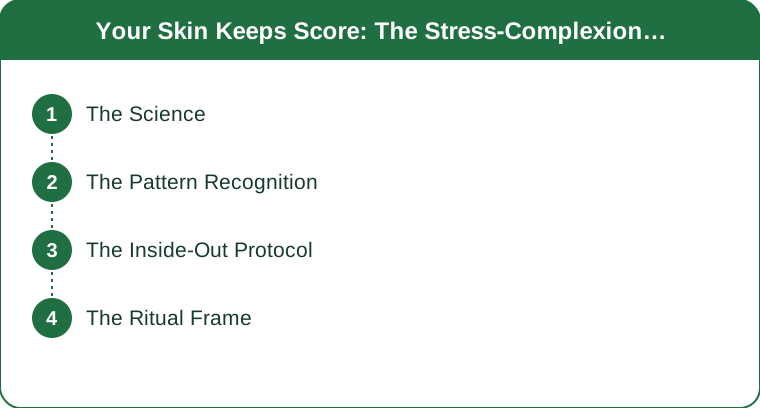
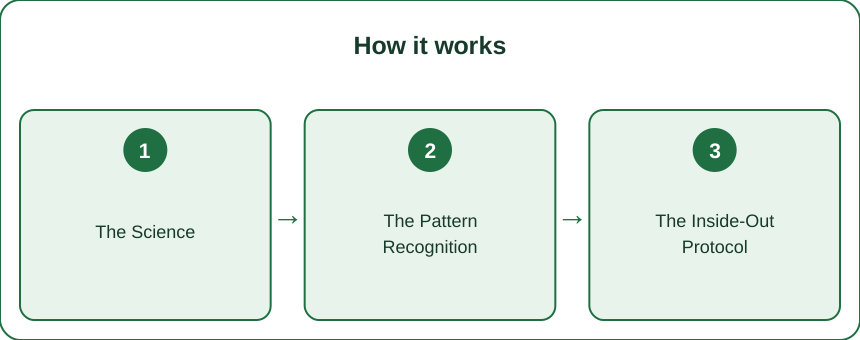
How stress reaches the face: the cortisol-oil pathway (stress hormones ramp sebum production — the deadline-week breakout has a mechanism; the hormonal-acne pattern from the skin chapters with a stress accelerant), the inflammation amplifier (chronic stress keeps inflammatory signaling elevated — the eczema, psoriasis and rosacea flares that track life stress; the conditions’ stress-sensitivity being clinically recognized), the barrier degradation (stress impairs the skin barrier’s repair — the moisture loss and sensitivity that make everything else worse), the sleep-deprivation multiplier (the stressed sleep degrading the overnight skin-repair shift — the beauty-sleep chapter’s science running in reverse), and the behavior layer (the stressed picking, the skipped routines, the comfort-food shifts — the indirect pathway that’s often the biggest one).
The Pattern Recognition
Reading your skin’s stress signature: the timing detective work (the flare mapped against the calendar — the two-week lag that connects the crunch to the breakout; the skin journal alongside the stress journal), the location tendencies (the stress-acne’s jaw-and-chin lean, the eczema’s familiar sites reactivating — your personal pattern being the most useful data), the condition-specific notes (the diagnosed conditions — eczema, psoriasis, rosacea — deserving the dermatologist relationship, with stress management as the adjunct; the treatment plus calm beating either alone), and the honest attribution (not every breakout is stress — the sweat-hygiene, product and hormonal-cycle causes audited too; the stress explanation earned, not defaulted).

The Inside-Out Protocol
What actually helps: the stress-management tier (the nervous-system tools — the breathwork, the walks, the boundary-setting from the burnout chapters — as legitimate skincare; the physiological-sigh being cheaper than any serum), the sleep priority (the skin’s repair shift protected — the wind-down routine as the real overnight mask; the beauty-sleep chapter’s protocol), the movement dose (the exercise that meters down stress hormones — with the post-sweat wash per the hot-class hygiene rules), the feeding layer (the skin-food chapter’s anti-inflammatory pattern — the omega-3s, the produce, the hydration; the stress-snacking sugar spikes that show up on the chin two weeks later), and the gentle-routine doctrine (the stressed skin treated SIMPLY — the barrier-supporting basics over the acid-heavy interventions; the flare season being the wrong time for the ten-step experiment).
The Ritual Frame
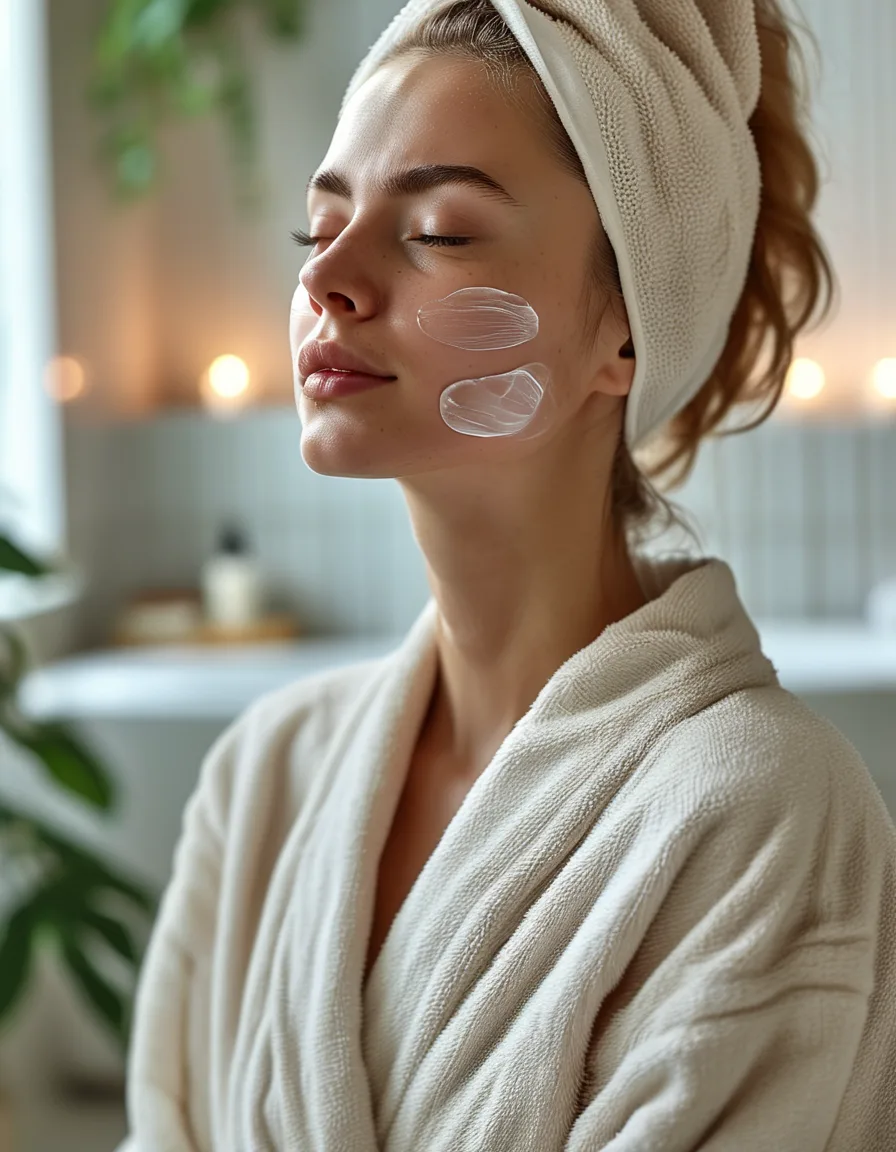
The routine as regulation: the skincare-as-mindfulness move (the evening routine performed slowly as a downshift ritual — the two minutes of touch and warm water as nervous-system signal; the self-touch calming effect being studied and real), the picking intervention (the stress-picking habit met with the fidget-replacement and the mirror-distance strategies — the habit-loop toolkit applied to skin; the damage that outlasts the deadline prevented), the compassion note (the stress-flare met with kindness — the harsh self-assessment about skin ADDING stress to the loop; the skin criticized flares harder, poetically), and the signal reframe (the skin read as a dashboard, not a verdict — the flare that prompts the earlier night, the walk and the boundary-check; the organ that tattles is doing you a favor). Calm the system, protect the sleep, simplify the routine: the score-keeper, settled.
Stress reaches skin through cortisol, inflammation and skipped sleep — the fix is nervous-system care plus a simpler routine, not more product. Read the flare as a dashboard and answer the real cause.
Keep Reading
This article is for general informational purposes only and is not medical advice. Always consult a qualified health professional for guidance specific to you.