The Complete Guide to Eating for a Stronger, More Resilient Skin Barrier
Quick Answer: Your skin barrier is built largely from lipids (ceramides, fatty acids, cholesterol) and structural proteins that come directly from what you eat — essential fatty acids, adequate protein, and specific micronutrients like zinc and vitamin A all play direct roles in barrier lipid production and repair speed. No topical product can fully compensate for a diet that’s consistently missing these building blocks.
You’ve tried barrier-repair creams and ceramide serums and your skin still feels reactive and dry. Before adding another product, it’s worth asking whether your plate actually contains the raw materials your skin needs to rebuild itself from within.

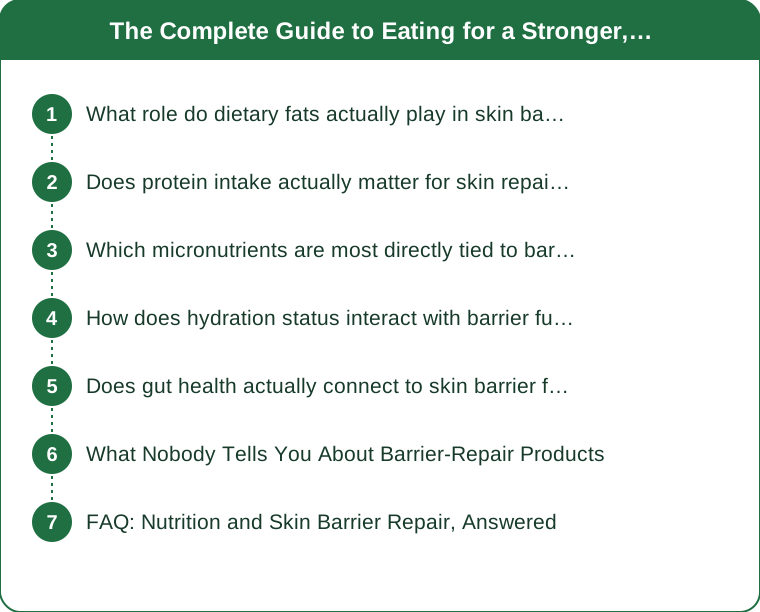
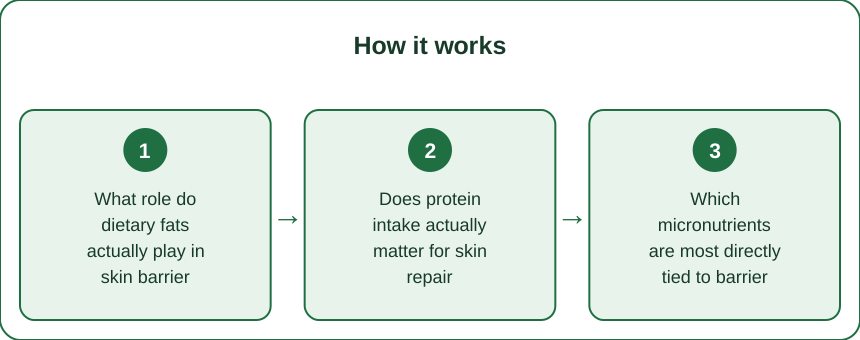
What role do dietary fats actually play in skin barrier structure?
The outermost skin layer is held together by a lipid matrix made largely of ceramides, cholesterol, and free fatty acids, and the fatty acid composition of that matrix is directly influenced by dietary fat intake over time. Diets low in essential fatty acids (particularly omega-3 and omega-6 in the right balance) are associated with a less effective, more permeable barrier that loses moisture more easily.
Fatty fish, walnuts, flaxseed, and olive oil all contribute meaningfully to this fatty acid pool, and consistency over weeks matters more than any single high-fat meal.
Does protein intake actually matter for skin repair specifically?
Yes — the structural proteins in skin, including collagen and the proteins that hold barrier cells together, require adequate dietary protein and specific amino acids to be synthesized properly. Chronic low protein intake can slow the skin’s natural repair and turnover cycle, making barrier damage from irritants, weather, or product overuse take longer to heal.
This doesn’t mean extreme protein intake accelerates skin repair beyond a certain point — it means adequate, consistent intake removes a bottleneck that under-eating protein can create.
Which micronutrients are most directly tied to barrier repair speed?
Zinc, vitamin A, and vitamin C each play distinct roles — zinc supports the enzymes involved in skin cell turnover and wound healing, vitamin A regulates skin cell production and differentiation, and vitamin C is essential for collagen synthesis and acts as an antioxidant protecting the barrier from oxidative damage. Deficiencies in any of these, even mild subclinical ones, are associated with slower barrier repair and increased sensitivity.
A varied diet with regular vegetables, lean protein, and some nuts or seeds typically covers these without needing targeted supplementation, unless a specific deficiency has been identified.

How does hydration status interact with barrier function specifically?
Adequate hydration supports the water content of the skin’s outer layer, which affects how flexible and resilient the barrier is under mechanical stress like stretching or friction. Chronic mild dehydration doesn’t just make skin feel dry superficially — it can reduce the barrier’s actual physical resilience over time, making it more prone to micro-damage from everyday factors like wind or harsh cleansers.
This interacts with dietary fat intake too, since a well-lipid-supported barrier retains water more effectively than a lipid-deficient one, meaning hydration and fat intake reinforce each other rather than working independently.
Does gut health actually connect to skin barrier function, or is that overstated?
There’s a real, growing body of evidence for a gut-skin axis, where gut inflammation and microbiome imbalance are associated with increased systemic inflammation that can worsen skin barrier conditions like eczema and general sensitivity. This connection is genuine but often oversimplified in wellness marketing — it’s one contributing factor among several, not a single fix that overrides diet quality, sleep, or topical care.
Fermented foods, adequate fiber, and diverse plant intake support gut health in ways that plausibly benefit skin barrier resilience indirectly, even though the research is still developing.
What Nobody Tells You About Barrier-Repair Products
Nobody tells you that the most expensive ceramide serum works within limits set by your actual nutritional status — a product can deliver ceramides topically, but it can’t fix an underlying deficiency in the fatty acids, protein, or micronutrients your skin needs to maintain and repair that barrier long-term on its own. Products and nutrition work on the same problem from two different directions.
This is why some people see a plateau with topical barrier repair alone, and why addressing diet alongside skincare often produces results that neither approach achieves fully by itself.
FAQ: Nutrition and Skin Barrier Repair, Answered
How long does it take for dietary changes to show up in skin barrier health?
Meaningful improvement typically takes 4-8 weeks of consistent dietary changes, since skin cell turnover and barrier lipid renewal happen on a multi-week cycle, not overnight.
Should I take fish oil supplements if I don’t eat much fish?
A supplement can help close the gap if dietary intake is consistently low, though whole-food sources also provide other beneficial nutrients that a supplement alone doesn’t replicate.
Can eating well fully replace the need for a good moisturizer?
No — nutrition supports the barrier from within, but a proper moisturizer still provides the external, immediate occlusive and hydrating support that diet alone can’t deliver instantly.
TL;DR:
- Dietary fats directly build the lipid matrix (ceramides, fatty acids) that holds your skin barrier together
- Adequate protein removes a bottleneck in skin’s natural structural repair process
- Zinc, vitamin A, and vitamin C each play distinct, direct roles in repair speed
- Hydration and gut health both interact with and reinforce barrier resilience
A barrier-repair cream and a barrier-supporting diet aren’t competing strategies — they’re the same repair job worked from two different directions, and skin barriers that struggle to improve with products alone often respond once both are addressed together.
Keep Reading
This article is for general informational purposes only and is not medical advice. Always consult a qualified health professional for guidance specific to you.