The Honest List of Skin and Hair Problems Diet Alone Cannot Fix
Nutrition genuinely supports skin and hair health in real, evidence-backed ways, and the inner-beauty framing sometimes overpromises what diet alone can actually accomplish for specific concerns that have other, more direct causes. Here is an honest list of what nutrition alone typically can’t fix, and what those specific concerns actually respond to instead. This is general information, not medical advice.

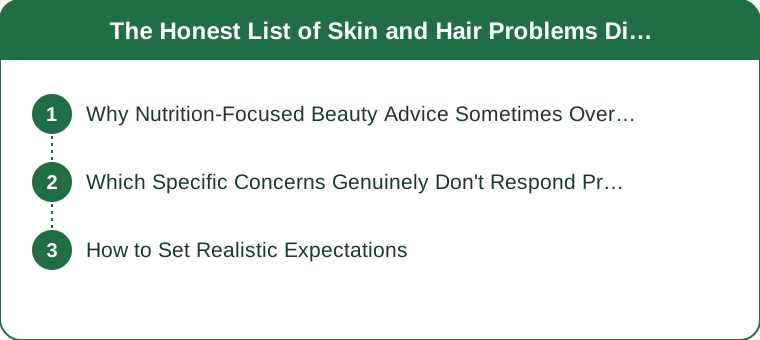
Why Nutrition-Focused Beauty Advice Sometimes Overpromises
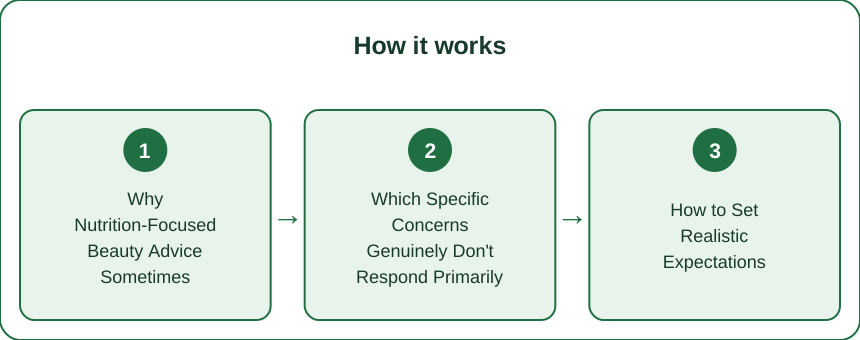
The framing problem: the nutrition-genuinely-supports-the-underlying-systems-but-cannot-override-a-primarily-structural-or-topical-cause (the diet providing genuine support to the underlying biological systems involved in skin and hair health, per the collagen-beauty-nutrition-guide logic, without being able to override a concern whose actual primary cause is structural, topical, or hormonal rather than nutritional in origin — the diet-providing-genuine-support-to-underlying-systems-without-being-able-to-override-a-concern-whose-primary-cause-is-structural-topical-or-hormonal-rather-than-nutritional), and the reframe (the overpromising as a category error — applying a nutrition-based fix to a concern whose actual root cause lies in a different system entirely, not evidence that nutrition doesn’t matter at all).

Which Specific Concerns Genuinely Don’t Respond Primarily to Diet
The honest list: the sun-damage-related-hyperpigmentation-and-fine-lines-are-driven-primarily-by-uv-exposure-and-respond-primarily-to-sun-protection-and-topical-treatment (the sun-related skin damage, per the skin-aging-timeline-truth-guide logic, being driven primarily by cumulative UV exposure and responding primarily to sun protection and targeted topical treatment, with diet playing a genuinely secondary supportive role at best — the sun-related-skin-damage-being-driven-primarily-by-cumulative-uv-exposure-and-responding-primarily-to-sun-protection-and-targeted-topical-treatment-with-diet-playing-a-genuinely-secondary-role), the the-genetically-driven-hair-thinning-patterns-are-driven-primarily-by-hormonal-and-genetic-factors-that-diet-alone-doesnt-override (the genetically influenced hair thinning patterns, per the hair-thinning-women-guide logic, being driven primarily by hormonal and genetic factors that diet alone generally doesn’t override, even though adequate nutrition remains a relevant supporting factor — the genetically-influenced-hair-thinning-patterns-being-driven-primarily-by-hormonal-and-genetic-factors-that-diet-alone-generally-doesnt-override), the the-active-inflammatory-skin-conditions-often-require-direct-topical-or-medical-treatment-that-diet-changes-alone-generally-cant-substitute-for (the active inflammatory skin conditions, per the stress-skin-connection-guide logic, generally requiring direct topical or medical intervention that dietary changes alone typically can’t substitute for, even when diet may play some contributing role — the active-inflammatory-skin-conditions-generally-requiring-direct-topical-or-medical-intervention-that-dietary-changes-alone-typically-cant-substitute-for), and the frame (the honest list as sun-damage-related aging, genetically driven hair thinning, and active inflammatory skin conditions — three concerns where the primary actual cause and the primary effective intervention both lie outside of diet, even though nutrition remains a real supporting factor in each case).
How to Set Realistic Expectations
The balanced approach: the treat-nutrition-as-a-genuine-supporting-factor-alongside-the-primary-intervention-rather-than-a-standalone-replacement-for-it (the framing nutrition as a real, worthwhile supporting factor to be combined with the primary, more directly effective intervention for a given concern, rather than treated as a standalone substitute for it, per the gut-skin-beauty-connection-guide logic — the framing-nutrition-as-a-real-worthwhile-supporting-factor-to-combine-with-the-primary-more-directly-effective-intervention-rather-than-a-standalone-substitute), the the-identify-the-actual-primary-driver-of-a-specific-concern-before-choosing-where-to-focus-effort-and-resources (the taking the time to identify what’s actually driving a specific concern before deciding where to focus the bulk of effort and resources, rather than defaulting to a dietary fix for every concern regardless of its actual cause — the taking-time-to-identify-whats-actually-driving-a-specific-concern-before-deciding-where-to-focus-effort-rather-than-defaulting-to-a-dietary-fix-for-every-concern), and the frame (the realistic approach as treating nutrition as a genuine supporting factor rather than a standalone fix, and identifying the actual primary driver of a specific concern before deciding where the bulk of effort belongs — a more accurate and ultimately more effective way to combine nutrition with the other interventions that actually address a given concern’s real cause. This is general information, not medical advice.)
Nutrition genuinely supports the underlying biological systems involved in skin and hair health, but can’t override a concern whose actual primary cause is structural, topical, or hormonal rather than nutritional — sun-damage-related hyperpigmentation and fine lines are driven primarily by cumulative UV exposure and respond primarily to sun protection and topical treatment, genetically influenced hair thinning patterns are driven primarily by hormonal and genetic factors diet alone generally doesn’t override, and active inflammatory skin conditions generally require direct topical or medical intervention that dietary changes alone typically can’t substitute for. Setting realistic expectations means framing nutrition as a genuine supporting factor to combine with the primary, more directly effective intervention for a given concern rather than a standalone replacement for it, and taking the time to identify what’s actually driving a specific concern before deciding where the bulk of effort and resources should go. This is general information, not medical advice.
Keep Reading
This article is for general informational purposes only and is not medical advice. Always consult a qualified health professional for guidance specific to you.