What to Eat for Stronger Nails: The Nutrition That Actually Reaches Your Fingertips
Quick Answer: Nails are almost pure keratin - a protein - built slowly at the matrix under your cuticle and pushed out over five to six months, so they are a long-delay readout of protein intake, iron status, zinc, and overall energy sufficiency. The food that builds them: adequate daily protein (the single biggest lever, roughly 1.2-1.6 g per kg for active women), iron-rich foods paired with vitamin C, zinc sources, omega-3s for flexibility, and enough total calories - crash diets reliably show up as ridges and peeling months later. Biotin helps mainly the genuinely deficient minority; for everyone else the gummy is dessert. And half of nail strength is not nutrition at all - it is water exposure and mechanical habits.
Nails do not lie, but they do procrastinate: the peeling tips you are frowning at today were manufactured back in early spring. That five-month lag is exactly why nail nutrition confuses everyone - and why fixing it requires planting food now for nails you will meet after the holidays.

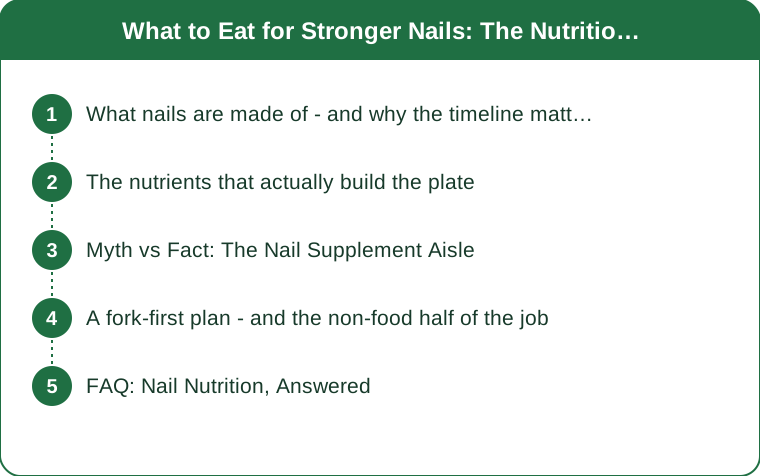
What nails are made of - and why the timeline matters
Keratin, layered like plywood. The nail plate is dead, tightly packed keratin protein in overlapping layers, glued with lipids and holding a small amount of water that keeps it flexible. Strength problems come in flavors: peeling (the layers delaminating), splitting (cracks running in), bending (plate too thin or too dry), and slow growth - and the flavors hint at different causes.
All manufacturing happens at the matrix. The pale half-moon zone under your cuticle is the only living, building part; everything visible is finished product in shipping. Nutrition, illness, and stress affect the factory - which means today’s intake changes the millimeter being built today, invisible under the cuticle, arriving at your fingertip in months.
Fingernails take five to six months to fully replace themselves (toenails a year or more), growing about 3 millimeters a month, faster in youth and summer, slower with age and cold. Two consequences: any nutrition change needs a minimum three-month judgment window before you call it failed, and current nail problems are a report about the past - the winter diet, the spring stomach bug, the months of crash eating - not necessarily about this week.
The body also triages nails last. Nail (and hair) building is low-priority tissue: under energy restriction, illness, or nutrient shortfall, resources go to organs first, and the matrix quietly downgrades output. This is why nails are such honest little historians of under-eating and deficiency - and why horizontal ridges and slowed growth so often trail a hard diet, a surgery, or a rough season by a few months. The nail is not being dramatic; it is showing you the budget cuts.
The nutrients that actually build the plate
Protein is the headline, and most brittle-nail diets are quietly short of it. Keratin is protein; matrix cells are among the faster-dividing in the body; and intake below roughly 1.2 g per kg of body weight - extremely common in women eating light - shows up over months as thin, soft, peel-prone plates. The fix is boring distribution: 25-30 g per meal from eggs, Greek yogurt, fish, poultry, tofu, lentils, cottage cheese. Nails are one of the places a protein-adequate diet visibly outperforms a protein-vague one.
Iron is the most common tested deficiency behind bad nails in women. Low ferritin - even without full anemia - associates with brittle, thin, ridged nails, and in advanced cases the spoon-shaped curve clinicians recognize on sight. Menstruating, endurance-training, and plant-based women are the high-risk trio. Food route: red meat occasionally, mussels, sardines, lentils, beans, tofu, pumpkin seeds - plant sources paired with vitamin C (peppers, citrus, berries) and separated from coffee and tea, which block absorption meaningfully.
Zinc runs the cell-division line. Shortfall shows as white spots, slow growth, and fragile plates; oysters are the famous source, with beef, chickpeas, cashews, and yogurt doing daily duty.
Omega-3s and overall fats keep the plate flexible instead of shattery. The lipid mortar between keratin layers needs dietary fat - very low-fat diets produce dry, peeling nails on schedule. Salmon, sardines, walnuts, chia, olive oil.
And the quiet structural crew: magnesium (ridging when short), B12 and folate (bluish or ridged changes when deficient - relevant for plant-based eaters), and vitamin C for the collagen in the nail bed underneath. Silicon and selenium get supplement press with thin evidence and, in selenium’s case, real over-dose toxicity - brittle nails ironically among its symptoms. Food covers both without the risk.

Myth vs Fact: The Nail Supplement Aisle
Myth: Biotin transforms everyone’s nails. Fact: The classic studies showing thickness improvement used specific brittle-nail patients, and biotin deficiency is genuinely uncommon on a normal diet. The deficient minority respond well; for everyone else evidence is thin. One practical caution with real-world teeth: high-dose biotin interferes with common lab tests - including thyroid panels and some cardiac markers - so tell your doctor and pause it before blood work.
Myth: Collagen supplements rebuild nails directly. Fact: Swallowed collagen is digested into amino acids like any protein - nothing travels intact to the matrix. Small trials of collagen peptides show modest brittleness improvements, plausibly because it is, functionally, extra protein. If your diet is protein-short, food or any quality protein source achieves the same with better economics.
Myth: White spots mean calcium deficiency. Fact: The spots are almost always minor trauma to the matrix weeks earlier - a bump you forgot. Calcium’s role in nail structure is small; milk-for-nails is folklore. Persistent widespread white discoloration is a different story worth a clinician’s eye.
Myth: Gel and polish ruin nails from outside, so nutrition cannot help. Fact: Both stories are true on different layers: soaking, acetone, and rough removal damage finished plate; nutrition determines what quality of plate arrives next. The strongest routine pairs kind externals with a matrix on full rations.
Myth: Nails growing slowly means something is wrong. Fact: Growth rate falls naturally with age, cold seasons, and circulation differences - slow but sound nails are usually fine. The changes that earn medical attention are different: new dark streaks, spooning, clubbing, pitting, or nails lifting off the bed - those are clinician visits, not smoothie problems.
This is general information, not medical advice - and any new dark line under a nail deserves prompt professional evaluation.
A fork-first plan - and the non-food half of the job
The daily template that covers the matrix: breakfast anchored by eggs or Greek yogurt (protein plus biotin plus zinc); one palm-size protein at lunch and dinner; oily fish twice a week; a big handful of legumes or pumpkin seeds most days for iron and zinc; vitamin C produce alongside plant iron; nuts or olive oil daily for the lipid mortar; and - the unglamorous one - enough total food. The matrix is a luxury factory; it closes early in a famine, and months-long aggressive deficits reliably print themselves onto the nails of the following season.
Test before you supplement. If nails are persistently poor despite three months of solid eating, the productive move is a clinician conversation and basic labs - ferritin, thyroid, B12 - rather than stacking gummies. Thyroid disorders are a classically overlooked cause of brittle nails, and iron is a testable, fixable one. Supplement in response to data; that sentence retires most of the aisle.
Then protect the product, because half of nail strength never was nutrition. Water is the great delaminator - every soak-dry cycle swells and shrinks the keratin layers until they peel, which is why dish-heavy weeks wreck nails that months of good eating built. Gloves for dishes and cleaning, hand cream with a cuticle rub after washing, and an oil (jojoba, or plain olive) massaged in nightly do visible work within weeks - faster than any food can, since they protect finished plate.
Mechanical habits are the other half: nails as tools (tape-peeling, can-lifting, label-scraping) crack more plates than any deficiency; long nails are levers, so modest length survives real life better; filing in one direction beats sawing; and ragged edges snagged today become splits next week - keep a file in the bag.
Set the checkpoint properly: photograph your nails today, eat and glove accordingly, and compare at the three-month mark - one full growth generation. Judging sooner is reviewing the old factory’s output; judging then is reading your actual results.
FAQ: Nail Nutrition, Answered
How long until diet changes show in my nails?
New, better-built nail must physically grow out from under the cuticle: first hints at the base in six to eight weeks, meaningful change at three months, full replacement in five to six. Photograph now and compare at the quarter mark - anything sooner is judging the previous regime.
What is the single most important nutrient for nails?
Protein - nails are keratin, and chronic intake below roughly 1.2 g per kg is the most common quiet cause of soft, peeling plates in women. After protein: iron (test ferritin if suspicious), zinc, omega-3 fats, and simply enough calories. Deficiency correction beats supplementation-on-spec every time.
Is biotin worth taking for nails?
If you are in the small deficient minority, yes - responses can be dramatic. For everyone else the evidence is modest, and high doses skew common lab tests (thyroid, some cardiac markers), so disclose it to your doctor and pause before blood work. Eggs, salmon, nuts, and seeds cover normal needs.
Why do my nails peel in layers no matter what I eat?
Peeling is usually a water-and-mechanics story layered on nutrition: soak-dry cycles from dishes and washing delaminate the keratin plies faster than the matrix can outbuild them. Gloves, post-wash hand cream, nightly cuticle oil, one-direction filing - plus the protein and fat basics - is the combination that actually ends it.
When are bad nails a medical sign rather than a diet issue?
When changes are new and structural: dark streaks under the plate (prompt evaluation), spooned or clubbed shapes, pitting, lifting from the bed, or brittleness alongside fatigue, hair loss, or cold intolerance - that cluster suggests thyroid or iron issues worth labs. Slow, gradual fragility with an obvious diet story is the version food fixes.
TL;DR:
- Nails are slow-printed keratin: today’s intake becomes fingertip reality in three to six months, so judge changes on a one-generation timeline.
- Protein adequacy is the biggest lever; iron (test ferritin), zinc, omega-3s, and sufficient calories build the rest - crash diets print ridges months later.
- Biotin helps the genuinely deficient few and skews lab tests at high doses; collagen is expensive protein; white spots are old bumps, not calcium.
- Half the job is protection: gloves for water, nightly cuticle oil, one-direction filing, and retiring nails from tool duty.
- New dark streaks, spooning, pitting, or lifting - or brittleness with fatigue - are clinician territory, not gummy territory.
Feed the factory, protect the shipment, and check back in ninety days - the nails you want are already under your cuticles, being built out of whatever this week’s meals provide.
Keep Reading
This article is for general informational purposes only and is not medical advice. Always consult a qualified health professional for guidance specific to you.