Why Your Skin Genuinely Looks Different Depending on What You Ate the Day Before
Quick Answer: Skin can visibly change within 24-48 hours of a notably different day of eating because several of the pathways connecting diet to skin — blood sugar spikes, inflammation, and hydration status — act relatively quickly, well before longer-term nutrient status has time to shift, which is why a rough eating day can show up on your face almost immediately.
A slow, gradual nutrient deficiency taking weeks to show on skin is one story. A puffy, dull, slightly inflamed look the morning after pizza and no water is a completely different, much faster mechanism — and it’s the one behind most day-to-day skin appearance changes people actually notice.

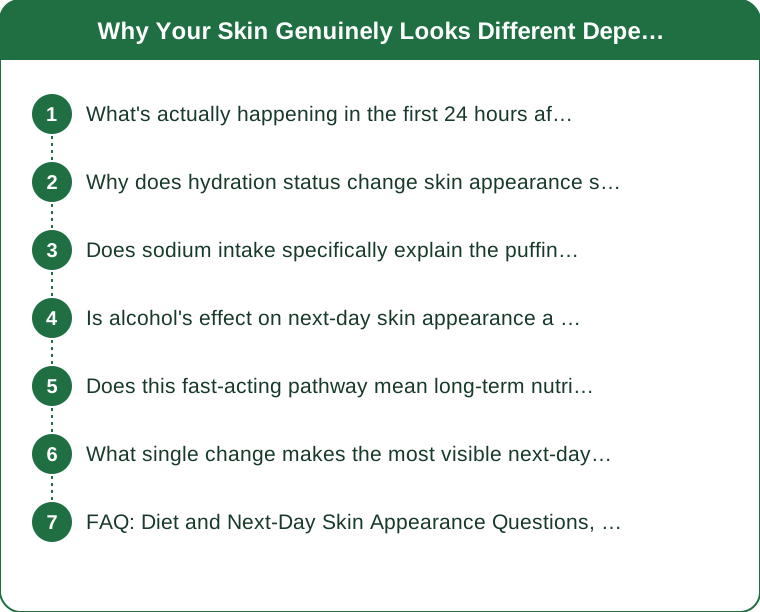
What’s actually happening in the first 24 hours after a high-sugar, low-water day?
A sharp blood sugar spike triggers a cascade involving insulin and, downstream, inflammatory signaling molecules that can increase skin redness and puffiness within hours — this is a well-documented pathway distinct from the slower glycation process (which damages collagen over months to years) that’s more often discussed in skincare content. The fast, next-day puffiness is largely this acute inflammatory response, not accumulated long-term damage.
Why does hydration status change skin appearance so quickly specifically?
Skin is a highly vascular, water-responsive tissue, and even mild systemic dehydration reduces skin turgor and blood flow to the surface within hours, which commonly reads as dullness or a slightly sunken, tired look — this reverses just as quickly with rehydration, which is why ‘drink more water’ genuinely does produce a visible, same-day-ish improvement for this specific symptom, even though it doesn’t fix deeper structural skin issues.
Does sodium intake specifically explain the puffiness people notice?
A meaningful part of it, yes — a high-sodium meal shifts fluid retention, and the face, with its thin skin and high vascularity, tends to show that fluid shift more visibly and more quickly than most other parts of the body, which is part of why a salty restaurant meal the night before often correlates with visible next-morning facial puffiness specifically.

Is alcohol’s effect on next-day skin appearance a separate mechanism, or the same ones combined?
Largely the same mechanisms compounded — alcohol is dehydrating (worsening the hydration-related dullness), often accompanies higher-sodium, higher-sugar food choices, and independently triggers some inflammatory response, which is why a night involving both alcohol and less careful eating tends to produce a more pronounced next-day skin effect than either factor alone.
Does this fast-acting pathway mean long-term nutrient status (like collagen-supporting nutrients) doesn’t matter for skin?
No — they’re separate, complementary mechanisms operating on very different timescales. The fast inflammatory and hydration pathway explains day-to-day appearance swings, while longer-term nutrient adequacy (protein, vitamin C, omega-3s, zinc) affects the skin’s underlying structural quality over weeks and months — both matter, they just show up on completely different timelines and respond to different kinds of dietary changes.
What single change makes the most visible next-day difference after a rough eating day?
Rehydrating consistently through the following day, alongside a lower-sodium, more balanced next meal, tends to produce the fastest visible improvement, since it directly addresses both the fluid-retention and dehydration-dullness components — this won’t undo a genuinely poor longer-term diet, but for an isolated rough day, it closes most of the visible gap within 24-48 hours.
How much of this varies from person to person?
Considerably — individual sensitivity to blood sugar spikes, sodium, and alcohol varies a lot, partly due to genetics and baseline health status, which is why two people can eat an identical meal and one notices dramatic next-day puffiness while the other notices very little. Paying attention to your own specific patterns over a few instances is more useful than assuming a universal timeline applies.
FAQ: Diet and Next-Day Skin Appearance Questions, Answered
How quickly does skin actually improve after rehydrating and eating more balanced following a rough day?
Many people notice visible improvement in puffiness and dullness within 24-48 hours of consistent rehydration and a return to typical eating, since the underlying mechanisms (fluid retention and acute inflammation) resolve relatively quickly once the triggering pattern stops.
Does this mean an occasional indulgent meal will permanently damage skin?
No — this is specifically about temporary, next-day appearance from acute inflammatory and hydration shifts, which is fully reversible; it’s chronic, repeated patterns over months, not an isolated meal, that would connect to longer-term skin structural changes.
Is there a way to reduce next-day puffiness before it even happens, if a big indulgent meal is planned?
Pre-hydrating well in the hours before, and balancing the meal with some protein and vegetables alongside less careful choices, tends to soften the next-day effect somewhat, though it won’t eliminate it entirely if sodium and sugar intake are both notably high.
TL;DR:
- Next-day skin changes are largely driven by fast-acting blood sugar, inflammation, and hydration pathways, not long-term damage
- Even mild systemic dehydration visibly reduces skin turgor and blood flow within hours
- High sodium intake shifts fluid retention that shows up quickly in the face specifically
- Rehydrating and eating a more balanced next meal typically resolves the visible effect within 24-48 hours
- Long-term nutrient status still matters for skin structure — it just operates on a completely different timescale
The morning-after skin dip is real, fast, and reversible — it’s just a different mechanism than the slower nutrient story most skincare content focuses on.
Keep Reading
This article is for general informational purposes only and is not medical advice. Always consult a qualified health professional for guidance specific to you.