The Zinc-Skin Clarity Connection: What the Evidence Actually Shows
Quick Answer: Zinc’s link to skin clarity is strongest specifically in people with a documented or likely zinc deficiency, where supplementation has shown measurable improvement in inflammatory acne in several controlled studies — for people with already-adequate zinc levels, additional supplementation shows little to no added benefit for skin clarity.
The research supports zinc as a deficiency-correction tool, not a universal skin fix, and that distinction matters for whether it’s worth adding to your routine.

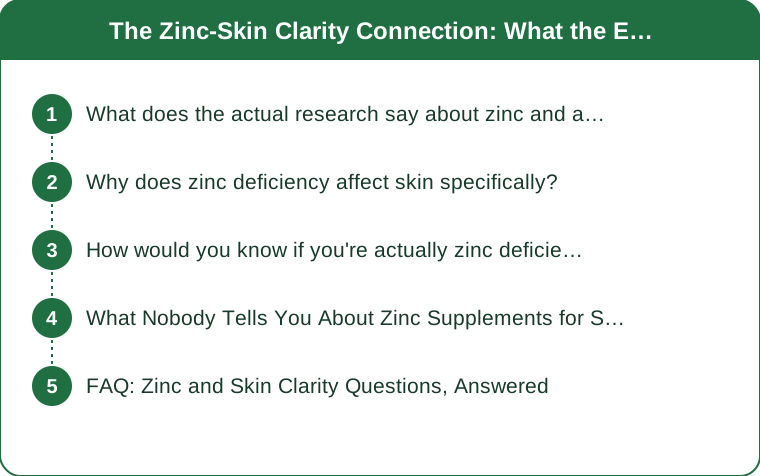
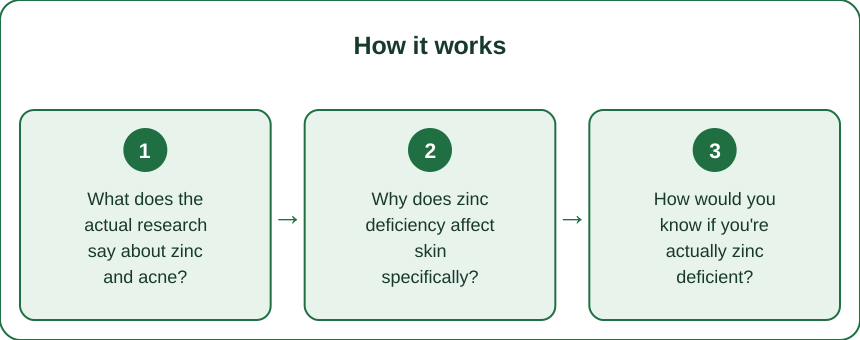
What does the actual research say about zinc and acne?
Several controlled studies, particularly from the 1970s through 2000s, found that oral zinc supplementation reduced inflammatory acne lesions in participants, with effect sizes varying based on baseline zinc status. A commonly cited pattern across this research: people who started with lower blood zinc levels saw more pronounced improvement than people who started with normal or high levels, which is a strong signal that zinc’s benefit is tied to correcting an existing shortfall rather than providing a general skin-clearing effect on top of adequate levels.
More recent reviews have been more cautious, noting that study quality varies significantly and that zinc’s effect size, while real, tends to be modest compared to standard acne treatments like topical retinoids or benzoyl peroxide. It’s reasonable to view zinc as a supportive factor rather than a primary treatment.
Why does zinc deficiency affect skin specifically?
Zinc plays a role in several processes directly relevant to skin health: it supports the immune response that regulates inflammation (relevant to inflammatory acne specifically, not just any skin issue), contributes to wound healing and tissue repair, and helps regulate oil gland activity. A genuine deficiency can disrupt several of these processes simultaneously, which is why correcting it sometimes produces a noticeably larger skin improvement than you’d expect from a single nutrient.
This also explains why zinc supplementation studies show inconsistent results across different populations — a study population with widespread mild deficiency (common in some dietary patterns low in meat, shellfish, and legumes) will show a different response than a population that’s already zinc-replete.

How would you know if you’re actually zinc deficient?
A blood test is the only reliable way to confirm zinc status, since dietary recall alone is a poor predictor — zinc absorption is affected by factors like phytates in grains and legumes, which can reduce how much dietary zinc is actually absorbed even from a diet that looks adequate on paper. People following plant-heavy diets without much attention to zinc-rich or zinc-absorption-friendly food pairing are at somewhat higher risk of a mild deficiency worth checking.
What Nobody Tells You About Zinc Supplements for Skin
High-dose zinc supplementation (well above the recommended daily amount) can actually interfere with copper absorption over time, which has its own set of health consequences — more is not simply better once you’re past correcting an actual deficiency.
Most of the positive zinc-acne research used doses higher than what’s in a typical multivitamin, meaning the small amount of zinc in a general multivitamin is unlikely to produce the same effect seen in dedicated studies, even if the multivitamin technically ‘contains zinc.’
Topical zinc (in some skincare formulations) and oral zinc supplementation are researched separately and shouldn’t be assumed to work through the same mechanism or produce comparable results.
FAQ: Zinc and Skin Clarity Questions, Answered
How long does zinc supplementation take to show a skin effect, if it’s going to work?
Studies showing benefit generally used supplementation periods of 8-12 weeks before evaluating results, so a short trial of a few weeks is unlikely to show whether it’s working either way.
Are there food sources of zinc that work as well as supplements?
Oysters, beef, pumpkin seeds, and legumes are strong dietary zinc sources, and correcting a mild deficiency through diet is a reasonable first approach before considering supplementation, especially since food sources come without the copper-interference risk of high-dose supplements.
Should I supplement zinc for skin clarity without testing my levels first?
Given that the benefit appears concentrated in people with an actual deficiency, and that high doses carry a real interaction risk, testing first is the more evidence-aligned approach rather than supplementing speculatively. This is general information, not medical advice.
TL;DR:
- Zinc’s skin benefit is strongest in people with an actual deficiency, not a universal effect
- Effective study doses were higher than what’s in most multivitamins
- High-dose zinc can interfere with copper absorption long-term
- Testing zinc levels before supplementing is more evidence-aligned than guessing
Zinc isn’t a myth — it’s a deficiency-correction tool that’s been oversold as a universal skin fix, and the research is actually pretty clear about which one it is.
Keep Reading
This article is for general informational purposes only and is not medical advice. Always consult a qualified health professional for guidance specific to you.